Thinking Ethically About AI in a World in Transition
Abstract
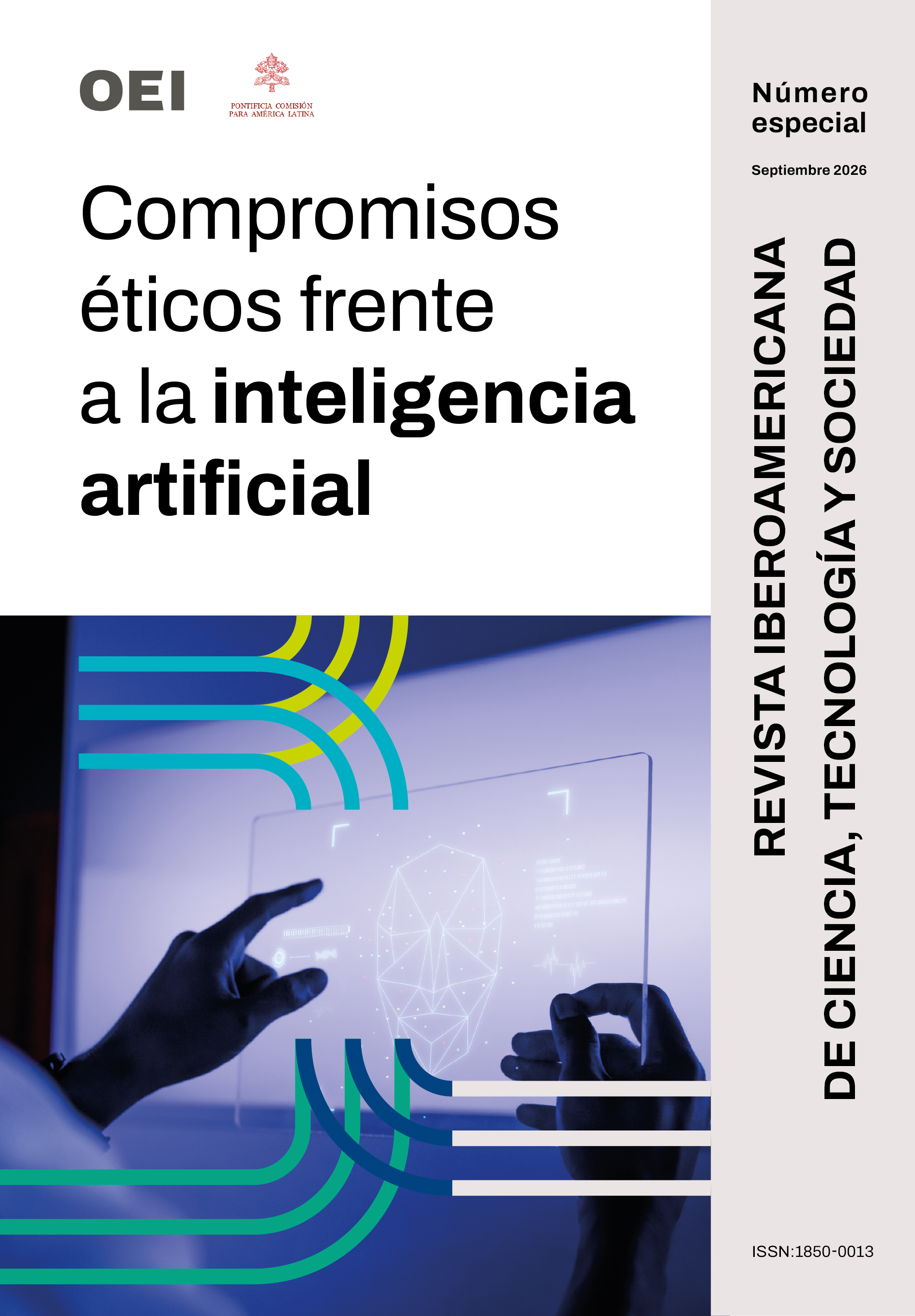
With the central aim of placing the human person at the heart of technological development, Pope Leo XIV’s first encyclical, Magnifica Humanitas, made a major impact on the international stage in May 2026 by reflecting on the need to affirm and protect human dignity in the face of the rise of digital tools such as artificial intelligence (AI). The Holy Father’s warnings resonate with particular relevance when we consider the present (and future) of Ibero-American countries, where the adoption of these advancements coexists with marked disparities in economic and social development, as well as challenges in areas such as education, health, and productivity.
Downloads
Downloads
Published
How to Cite
Issue
Section
License
Copyright (c) 2026 CC Attribution 4.0

This work is licensed under a Creative Commons Attribution 4.0 International License.
All CTS's issues and academic articles are under a CC-BY license.
Since 2007, CTS has provided open and free access to all its contents, including the complete archive of its quarterly edition and the different products presented in its electronic platform. This decision is based on the belief that offering free access to published materials helps to build a greater and better exchange of knowledge.
In turn, for the quarterly edition, CTS allows institutional and thematic repositories, as well as personal web pages, to self-archive articles in their post-print or editorial version, immediately after the publication of the final version of each issue and under the condition that a link to the original source will be incorporated into the self-archive.